The 2024 edition of ASCE 7 mandates explicit liquefaction evaluation for sites in Seismic Design Category D and above, which encompasses significant portions of Wake County. For Cary, sitting at an elevation where weathered saprolite meets deeper alluvial deposits, the risk is site-specific and often underestimated. Our laboratory runs cyclic triaxial tests on undisturbed Shelby tube samples retrieved from depth, complemented by standard penetration testing data processed with the NCEER simplified procedure. We calculate factors of safety against triggering and estimate lateral spreading displacement for foundation design. When the water table is shallow — common east of Kildaire Farm Road — post-liquefaction settlement can exceed 2 inches, a value that changes footing sizing decisions. We also integrate CPT data interpretation for continuous profiling in silty sands where SPT blowcounts alone give incomplete picture.
Liquefaction failures in the 2011 Mineral, Virginia earthquake occurred over 100 miles from the epicenter — fine sands in Cary face similar long-period amplification risk.
How we work
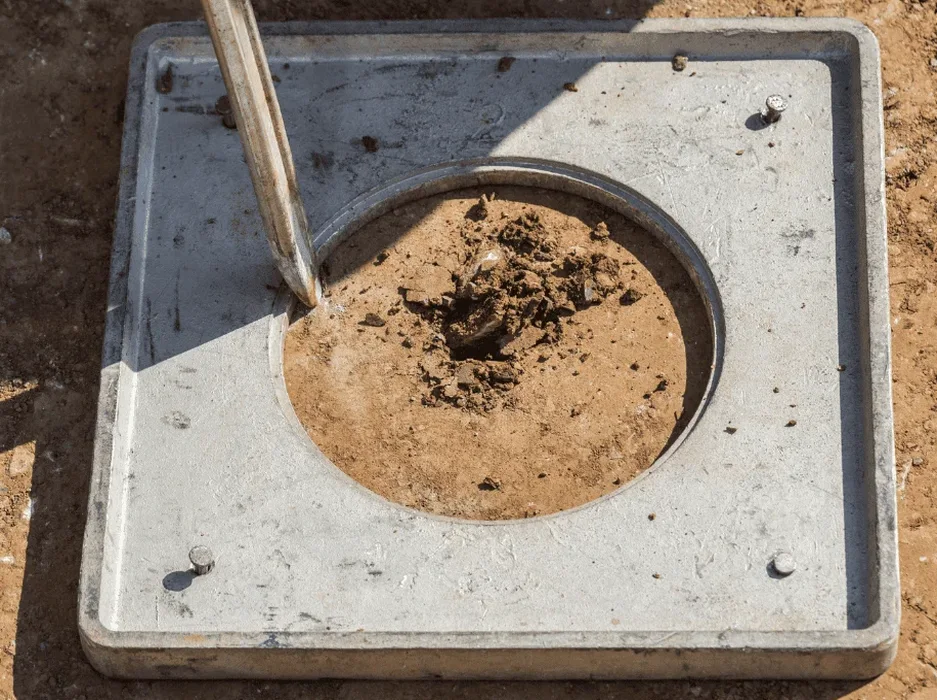
Local ground factors
The primary geologic hazard in Cary is not mountain-front faulting but the presence of Holocene-age alluvial terraces along Swift Creek and its tributaries. These deposits, mapped as Qal on USGS quadrangles, often contain loose, saturated fine sands with less than 15% fines content — textbook liquefiable material. A magnitude 5.5+ earthquake on the nearby Eastern Tennessee Seismic Zone, though infrequent, would produce peak ground accelerations around 0.12g to 0.18g on these soft soil sites. The consequence is not just bearing capacity loss; lateral spreading toward creek channels can displace shallow foundations laterally by several inches. In the 2011 Virginia earthquake, sand boils were documented at distances exceeding 90 miles from the epicenter. Our evaluation includes a screening-level lateral displacement estimate using the Youd et al. (2002) empirical model, so structural engineers can decide whether ground improvement or deep foundations are warranted.
Regulatory framework
ASTM D1586-18: Standard Test Method for Standard Penetration Test (SPT) and Split-Barrel Sampling, ASCE 7-22: Minimum Design Loads and Associated Criteria for Buildings and Other Structures, ASTM D5311-17: Standard Test Method for Load Controlled Cyclic Triaxial Strength of Soil, NCEER-97-0022: Proceedings of the NCEER Workshop on Evaluation of Liquefaction Resistance of Soils, IBC 2024 §1803.5.12: Seismic Design Category D Liquefaction Assessment
Complementary services
SPT-Based Liquefaction Triggering Analysis
Execution of ASTM D1586 standard penetration tests with hammer energy calibration per ASTM D4633. Data reduction includes overburden correction (CN), energy ratio correction (CE), and fines content correction. We deliver factor of safety profiles and post-triggering settlement estimates for each borehole.
Cyclic Triaxial Liquefaction Testing
Stress-controlled cyclic triaxial tests on undisturbed specimens to determine the cyclic stress ratio causing liquefaction in 15 uniform cycles. Results integrated into site-specific CRR curves for performance-based design when SPT correlations are insufficient.
Typical parameters
Questions and answers
What does a soil liquefaction analysis include for a Cary residential lot?
For single-family residential sites in Cary with Seismic Design Category D classification, the analysis starts with an SPT borehole advanced to at least 30 feet depth. We log the stratigraphy, sample the sand layers, run grain size distribution and Atterberg limits tests, then compute the factor of safety against liquefaction at each depth. The deliverable is a signed report with FS profiles and settlement estimates suitable for the building permit structural review.
How much does a liquefaction potential assessment cost in Cary?
For a typical single-family lot in Cary requiring one SPT borehole, laboratory testing, and the liquefaction report, the cost ranges between US$2,410 and US$3,800. The final figure depends on depth to competent bearing stratum, number of samples requiring cyclic testing, and whether CPT soundings are added to supplement the SPT data in silty sand layers.
How long does it take to get results from a liquefaction study?
Standard turnaround is seven business days from completion of field drilling. This includes sample extrusion, visual classification, grain size testing, data reduction using the NCEER spreadsheet, and senior review of the final report. Expedited three-day service is available when foundation design deadlines are tight, though cyclic triaxial testing may extend that window if undisturbed samples are required.