Geotechnical laboratory testing in Cary, North Carolina, forms the backbone of reliable foundation design and earthwork construction across Wake County's rapidly developing landscape. This category encompasses a comprehensive suite of analytical procedures that transform field samples into actionable engineering parameters, from basic index properties to advanced strength and consolidation testing. In Cary's competitive construction environment, where project timelines demand both speed and accuracy, laboratory testing provides the quantitative basis for bearing capacity calculations, settlement predictions, and slope stability analyses that directly influence structural safety and cost efficiency.
The significance of laboratory testing in Cary cannot be overstated, particularly given the region's complex subsurface conditions shaped by the Piedmont physiographic province. Local soils typically consist of residual silts and clays derived from weathered felsic crystalline rocks, primarily granite and gneiss, which exhibit variable degrees of saprolitic decomposition. These materials often display metastable fabric, where apparent stiffness at low strain can mask collapse potential upon wetting or loading. Without precise laboratory characterization, including grain size analysis (sieve + hydrometer) to quantify fines content and in-situ permeability correlations, engineers risk misinterpreting soil behavior, potentially leading to inadequate foundation support or drainage design failures.
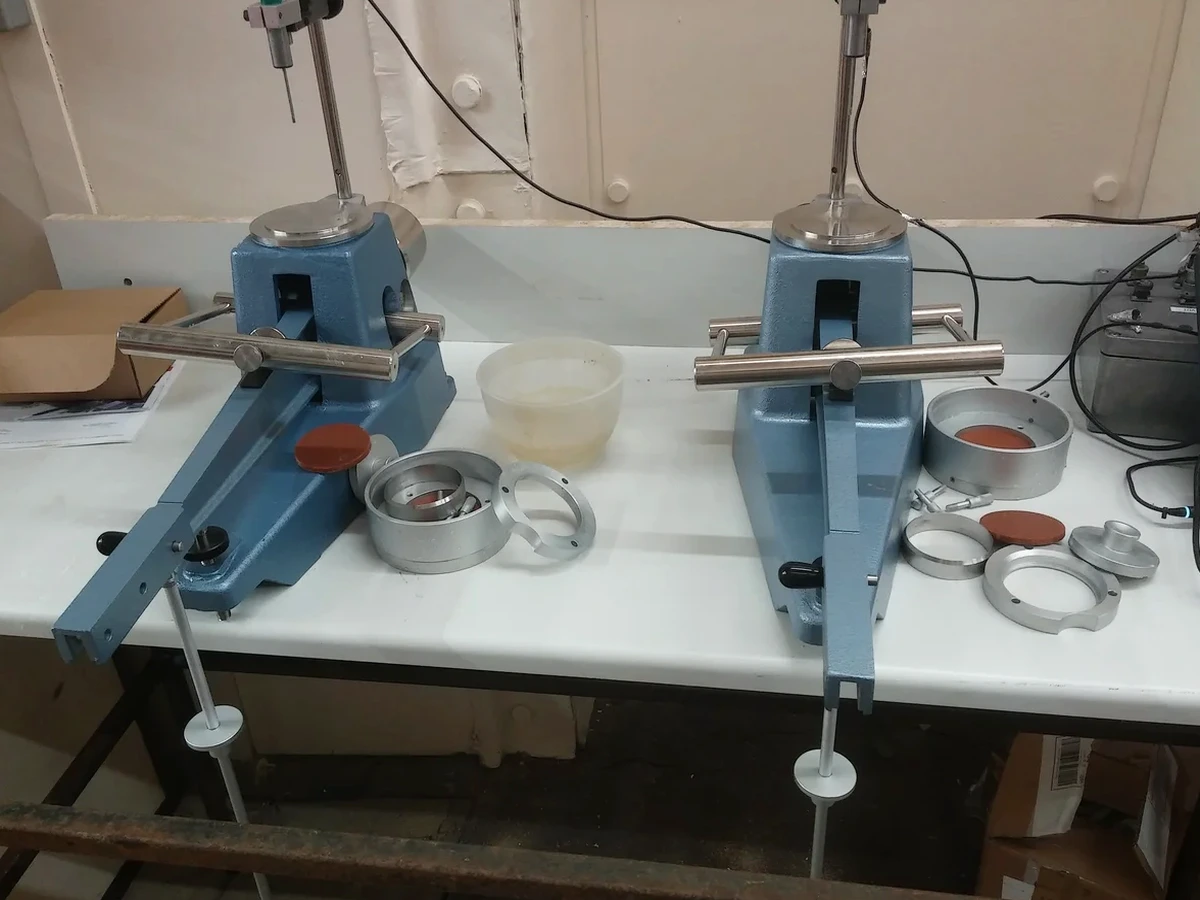
Regulatory compliance in Cary laboratory testing follows stringent standards established by ASTM International, with specific reference to ASTM D422 for particle size distribution, ASTM D4318 for Atterberg limits, and ASTM D2435 for consolidation testing. The North Carolina Building Code, which adopts the International Building Code with state-specific amendments, mandates that geotechnical investigations include laboratory testing programs appropriate to the geologic setting and proposed construction type. For projects under the jurisdiction of the Town of Cary Engineering Department, laboratory test results must be certified by a licensed professional engineer and submitted as part of the geotechnical report during permitting phases, particularly for commercial developments, subdivisions, and public infrastructure projects.
Diverse project types across Cary demand tailored laboratory testing scopes. Residential subdivisions in areas like Green Level or Carpenter require expansive soil characterization through Atterberg limits and swell testing to prevent foundation distress in slab-on-grade construction. Commercial developments in the Cary Park or Weston Parkway corridors often necessitate triaxial shear testing and consolidation analysis for deep foundation design where building loads exceed 3,000 psf. Infrastructure projects, including the widening of NC-55 or stormwater management facilities, rely on permeability testing and compaction curves to ensure embankment stability and liner performance. Even smaller-scale additions or retaining wall designs benefit from basic index testing to confirm site-specific parameters rather than relying on conservative published correlations that can inflate construction costs unnecessarily.
Available services
Questions and answers
What types of laboratory tests are typically required for geotechnical investigations in Cary, North Carolina?
Geotechnical investigations in Cary commonly require a combination of index property tests and engineering performance tests. Index testing includes moisture content, Atterberg limits, and grain size distribution to classify soils per the Unified Soil Classification System. Performance testing encompasses consolidation, direct shear, triaxial compression, and permeability assessments. The specific suite depends on project scope, geologic conditions, and structural demands, with expansive soil characterization being particularly important in Cary's residual Piedmont soils.
How do local soil conditions in Cary influence laboratory testing requirements?
Cary's Piedmont residual soils, formed from weathered granite and gneiss, exhibit significant variability in saprolitic decomposition and relic structure. Laboratory testing must account for this heterogeneity through careful sample selection and multiple test specimens. The silty clay matrix often shows sensitivity to disturbance, requiring high-quality sampling techniques. Collapse potential and expansive behavior are key concerns that demand specialized testing protocols beyond standard index testing to capture the metastable fabric typical of these partially weathered materials.
What ASTM standards govern geotechnical laboratory testing for Cary construction projects?
Geotechnical laboratory testing in Cary follows ASTM International standards adopted by reference in the North Carolina Building Code. Key standards include ASTM D422 for particle size analysis, ASTM D4318 for liquid and plastic limits, ASTM D2435 for one-dimensional consolidation, ASTM D3080 for direct shear, and ASTM D4767 for consolidated-undrained triaxial compression. The Town of Cary may also require compliance with NCDOT standards for public infrastructure projects, which reference AASHTO testing protocols.
When are laboratory permeability tests needed instead of field permeability testing for Cary projects?
Laboratory permeability tests are preferred when controlled hydraulic gradient conditions are necessary to determine intrinsic permeability independent of field boundary conditions. For Cary projects involving stormwater infiltration design, laboratory falling-head or constant-head tests on undisturbed samples provide baseline values that complement field testing. Laboratory testing is essential when evaluating compacted clay liners, assessing anisotropy in varved or laminated soils, or when site access limitations preclude reliable in-situ testing methods.
Location and service area
We serve projects across Cary North Carolina and surrounding areas.